Physical Address
304 North Cardinal St.
Dorchester Center, MA 02124
Physical Address
304 North Cardinal St.
Dorchester Center, MA 02124

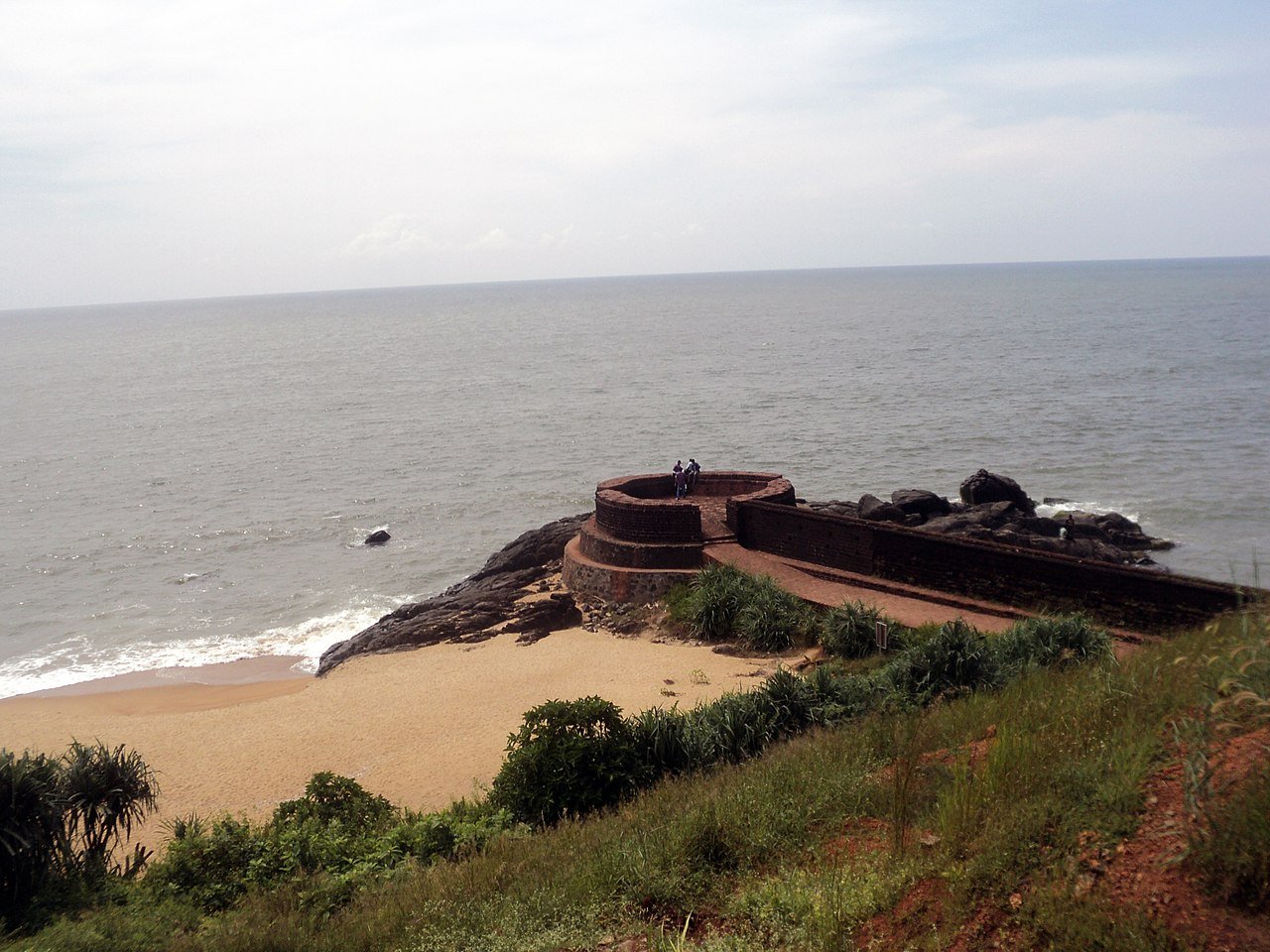
Bekal Fort is the largest fort in Kerala, located in Kasaragod district near the Arabian Sea. Built by Shivappa Nayaka of Keladi around 1650 AD, it spans over 40 acres with three-quarters of its walls touching water. It is a top heritage and coastal destination in North Kerala.
| Category | Details |
|---|---|
| Country | India |
| State | Kerala |
| District | Kasargod |
| Location | Near Bekal Beach, Kasargod District, Kerala |
| Timings | 8:00 AM to 6:00 PM (Every day) |
| Entry Fee | ₹25 per person for adults, free for children under 15 |
| How to Reach (By Train) | – Bekal Fort Railway Station (1.7 km) – Kanhangad Railway Station (12 km) – Kotikulam Railway Station (14 km) |
| How to Reach (By Air) | – Mangalore International Airport (71 km) – Kannur International Airport (101 km) – Calicut International Airport (195 km) |
| Nearby Attractions | – Bekal Beach – Kappil Beach – Hosdurg Beach – Chandragiri Fort – Nityanandashram Caves – Bekal Aquatics – The Lotus Houseboat |
| Facilities | Parking, Guide Services (optional), Cleanliness Maintenance |
| Best Time to Visit | October to March (Post-monsoon and winter months for pleasant weather) |
| Weather | Tropical climate with temperatures ranging from 25°C to 35°C; Monsoon from June to September. |
| Additional Info | The fort is well-maintained, and the view from the fort’s observation tower is one of the main highlights. |
Bekal Fort is the largest fort in Kerala, covering over 40 acres in Kasaragod district. Located right on the Arabian Sea coastline, nearly three-quarters of the fort’s exterior is surrounded by water. It is a protected monument under the Archaeological Survey of India and one of the most visited heritage sites in North Kerala.
If you are looking for a place that combines history, coastal scenery, and a genuine sense of scale — Bekal Fort is it.
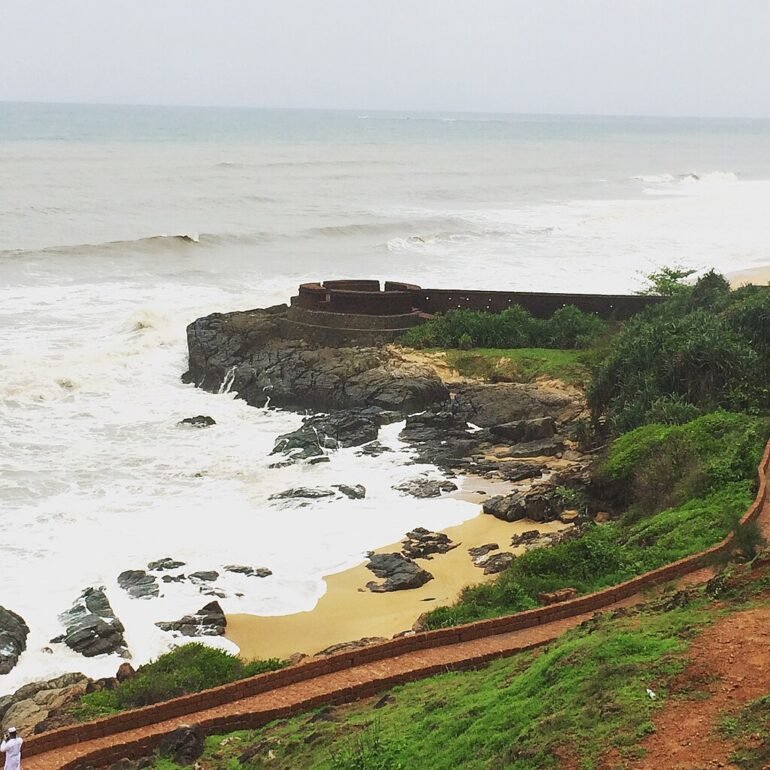
Standing on a laterite headland that juts into the Arabian Sea, Bekal Fort has a rare quality: it feels like the land ends and the fort begins. The massive walls, the sea on three sides, and the steady wind that comes off the water make it different from most forts you will visit in India.
The fort does not have palaces or decorated interiors. What it has is solid military architecture — thick walls, a zigzag entrance designed to slow attackers, defensive holes at multiple levels, and an observation tower that gives one of the widest views of the Malabar coastline available from any historic structure in Kerala.
Bekal Fort has been declared a special tourism area by the Government of India and is maintained by the Bekal Tourism Development Corporation. It draws visitors from across India and is popular as a destination for families, history enthusiasts, and photographers.

Bekal Fort was built around 1650 AD under Shivappa Nayaka of the Keladi (Ikkeri) Nayaka dynasty. It later came under the control of Hyder Ali, then Tipu Sultan, and finally the British East India Company after 1799. The fort’s history covers over 370 years of coastal military strategy.
Construction of the fort was initiated by Hiriya Venkatappa Nayaka and completed by Shivappa Nayaka, a powerful ruler of the Keladi kingdom in present-day Karnataka. The Nayakas built Bekal to consolidate their hold over the Malabar coast and its trade routes.
Before the Nayakas, Bekal was part of the territory controlled by the Kolathiri (Chirakkal) Royal Family after the decline of the Mahodayapuram Perumals in the 12th century. The region held significant maritime importance, and whoever controlled Bekal controlled access to a major port.
After the Keladi Nayakas, Hyder Ali of Mysore conquered the region, and Bekal came under Mysorean rule. Tipu Sultan later used Bekal Fort as an important military station during his campaigns in the Malabar. Archaeological excavations at the site have found coins and artefacts confirming the strong presence of the Mysore Sultans at this location.
Following Tipu Sultan’s death in the Fourth Anglo-Mysore War in 1799, the fort passed to the British East India Company. Under British control, Bekal became the headquarters of the Bekal Taluk of South Canara District in the Bombay Presidency. Over time, its strategic and commercial importance declined.
India declared Bekal Fort a special tourism area in 1992, and the Bekal Tourism Development Corporation was formed in 1995 to manage and promote the area.
Key architectural features worth noting:
Bekal Fort is famous for being the largest fort in Kerala at over 40 acres, for its unusual sea-facing position where three sides touch the Arabian Sea, and for being a filming location for the iconic song “Uyire Uyire” from the 1995 Tamil film Bombay directed by Mani Ratnam.
There are several specific reasons why Bekal Fort stands out among the many forts along India’s western coast:
1. Largest Fort in Kerala At over 40 acres, Bekal Fort is the single largest fort in the state of Kerala. Most forts in Kerala are considerably smaller in area, which makes Bekal unusual in its sheer scale.
2. Sea on Three Sides The fort’s position on a laterite promontory means that nearly three-quarters of its exterior is in contact with the sea. This is not a typical hill fort or a river fort — it is essentially a coastal fortification designed with naval defence in mind.
3. The Observation Tower The observation tower at the centre of the fort, added during Tipu Sultan’s time, offers 360-degree views of the coastline, the towns of Kanhangad and Bekal, and the Arabian Sea. It is one of the most photographed structures in the region.
4. Film Connection The famous song “Uyire Uyire” from Mani Ratnam’s 1995 film Bombay was filmed at Bekal Fort. That single sequence introduced the fort to millions across India and the Tamil-speaking world, and it remains one of the reasons people make the trip specifically to Bekal.
5. Architectural Integrity Unlike many historic forts that are in varying states of disrepair, Bekal Fort has been reasonably well maintained. The walls, bastions, and tower are largely intact, giving visitors a clear sense of what the original structure looked like.
The best time to visit Bekal Fort is between October and March, when the weather along the Kasaragod coast is dry, the skies are generally clear, and the sea is calmer. Avoid the peak monsoon months of June to August when the area receives heavy rainfall.
October to March — Ideal This is the recommended travel window. Temperatures stay between 22°C and 32°C, humidity is manageable, and the sea views from the fort and the observation tower are at their clearest. Bekal Beach nearby is also accessible during this period.
April to May — Hot but Manageable Temperatures rise significantly in April and May, often crossing 35°C. The fort has limited shade, so visiting early morning (by 8:30–9:00 AM) or late afternoon (after 4:00 PM) is practical if you are visiting in these months.
June to September — Monsoon Season The Kasaragod coast receives intense rainfall during this period. The fort itself can be slippery, and views are often obscured by cloud and rain. The sea turns rough and the nearby beach areas are not accessible for swimming. That said, some visitors specifically come during monsoon to see the dramatic sea conditions from the fort walls — if you do this, wear non-slip footwear and be cautious near the edges.
At Bekal Fort, visitors can walk along the fort walls, climb the observation tower for coastal views, explore the defensive architecture, watch the sunset over the Arabian Sea, and access Bekal Beach, which lies just below the fort complex.
1. Walk the Fort Walls The perimeter walk along the fort walls is the central experience at Bekal. The path takes you past the bastions, the embrasures, and gives continuous views of the sea below. Allow 45–60 minutes for a thorough walk without rushing.
2. Climb the Observation Tower The tower sits at the highest point of the fort. From the top, you can see the full sweep of the coastline, the towns of Kanhangad and Bekal in the distance, and on clear days, the landscape extending toward Mangalore in the north and Kannur in the south.
3. Photography Bekal Fort is one of the most photogenic heritage sites in Kerala. The combination of laterite stone walls, the deep blue or grey of the Arabian Sea, and the open sky creates strong visual conditions at almost any time of day. Sunrise and sunset are the most popular times for photography.
4. Sunset Viewing The western-facing position of the fort makes it an excellent location for watching the sun go down over the sea. Try to be at the fort at least an hour before closing time (6:00 PM) to catch the light.
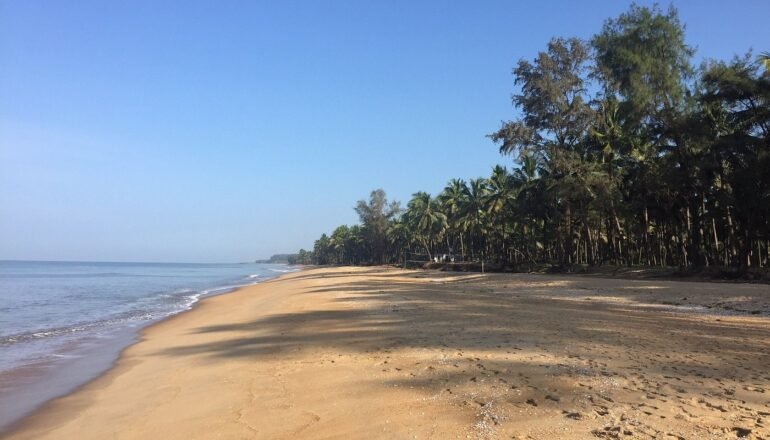
5. Visit Bekal Beach Bekal Beach sits adjacent to the fort and is accessible from the same area. It is a long, relatively uncrowded stretch of coast. Families often split time between the fort and the beach in a single visit.
6. Explore the Water Tank and Magazine Inside the fort, the old water storage tank and the powder magazine are worth examining. They give a clear picture of how the fort was designed to function as a self-sustaining military installation during a prolonged siege.

Bekal Fort is located about 16 km from Kasaragod town, 65 km from Kannur, and 70 km from Mangalore. It can be reached by road, rail, or air, with good connectivity from all three directions along the NH 66 corridor.
By Road
Bekal Fort is located directly off NH 66 (the old NH 17), which connects Mangalore in the north to Thiruvananthapuram in the south. From Kasaragod town, it is approximately 16 km — about 25–30 minutes by car or auto-rickshaw.
From Kannur, the drive is roughly 65 km (around 1.5 hours). From Mangalore, it is approximately 70 km (around 1.5 hours). KSRTC buses operate on the Mangalore–Kasaragod–Kannur route and stop near Bekal. Private taxis and auto-rickshaws are available from Kasaragod and Kanhangad.
By Train
The nearest railway station is Bekal Fort Railway Station, which is on the Mangalore–Palakkad main line. This is a small halt station, so not all trains stop here. Kanhangad Railway Station, about 12 km away, has better connectivity with more trains stopping there — including express trains from major cities.
From either station, auto-rickshaws and taxis connect to the fort.
By Air
The closest airport is Mangalore International Airport, approximately 71 km north of Bekal Fort. Kannur International Airport is about 101 km to the south. Both airports are connected to major Indian cities. From either airport, the recommended option is a pre-booked taxi to Bekal.
Within 30 km of Bekal Fort, you can visit Bekal Beach, Kappil Beach (known for its backwater-meets-sea setting), Chandragiri Fort, and the Ananthapura Lake Temple — making Bekal a practical base for exploring northern Kasaragod.
Bekal Beach — Adjacent to the fort. A wide beach with good facilities and relatively fewer crowds than Kovalam or Varkala. Read more about Bekal Beach.
Kappil Beach — About 6 km from Bekal Fort. Known for the point where the Kappil backwaters meet the Arabian Sea. Boat rides on the backwaters are available and popular.
Chandragiri Fort — Approximately 7 km from Bekal. A smaller fort at the confluence of the Chandragiri River and the sea, built around the same period as Bekal Fort. It is quieter, less visited, and offers a contrast in scale and setting.
Ananthapura Lake Temple — About 30 km from Bekal, near Kumbla. This is the only lake temple in Kerala and the original seat of Lord Ananthapadmanabha before the famous Padmanabhaswamy Temple in Thiruvananthapuram. It is an unusual and genuinely interesting temple to visit.
Kasaragod Town — The district headquarters, about 16 km away, has local markets, good food, and connections to the wider Kasaragod district area. Worth spending a morning or evening exploring.
Wear comfortable footwear, carry water, and plan your visit for the early morning or late afternoon to avoid midday heat. The fort has limited shade, so sun protection is practical. Bekal Fort closes at 6:00 PM, so time your arrival accordingly if you want to catch the sunset.
Footwear: The fort involves walking on uneven laterite stone surfaces. Comfortable closed shoes or sandals with grip are better than flip-flops, especially near the walls and the observation tower steps.
Timing your visit: The fort opens at 8:00 AM. Early morning visits (8:00–10:00 AM) give you the clearest light for photography and the smallest crowds. Late afternoon visits (4:00–6:00 PM) are good for the sunset. Midday (11:00 AM–3:00 PM) is the hottest and busiest window.
Carry water: There are vendors near the entrance, but once you are inside the fort, shade and water points are limited. Carry a bottle.
Camera equipment: The fort is excellent for photography but windy near the sea-facing walls. Be careful with equipment near the edges.
Combine with Bekal Beach: The fort and the beach are adjacent. Most visitors spend 1–1.5 hours in the fort and then 30–60 minutes at the beach. This is a very manageable half-day plan.
Parking: Parking is available near the fort entrance. If you are arriving by public transport, auto-rickshaws from Kanhangad or Kasaragod town stop near the entrance.
Photography inside: Photography is generally permitted. Check at the entrance for any current restrictions on drone use, as regulations in ASI-protected areas apply.
Bekal Fort holds several distinctions that make it unique among Kerala’s many historic structures — from its film connections to its military engineering.
Bekal Fort is famous for being the largest fort in Kerala at over 40 acres, for its dramatic position with three sides facing the Arabian Sea, and for being the filming location of the iconic song “Uyire Uyire” from the Tamil film Bombay (1995).
The song “Uyire Uyire” from Mani Ratnam’s Tamil film Bombay (1995) was filmed at Bekal Fort. The Malayalam film Madhuranombarakattu also featured a song filmed at the fort.
October to March is the best time to visit Bekal Fort. The weather is pleasant, the sea is calmer, and visibility from the observation tower is at its best during this period.
According to available information, entry to Bekal Fort is approximately ₹25 per adult for Indian nationals and ₹300 per person for foreign nationals. Ticket prices are subject to revision — verify the current rate at the entrance before your visit.
Yes. Bekal Fort offers a combination of genuine historical significance, unusual coastal architecture, and strong sea views that is rare in Kerala. It works well as a half-day visit on its own or as part of a broader Kasaragod itinerary. For anyone travelling the NH 66 corridor between Mangalore and Kannur, it is worth stopping for.
Bekal Fort was built by Shivappa Nayaka of the Keladi (Ikkeri) Nayaka dynasty. Construction was initiated by Hiriya Venkatappa Nayaka and completed by Shivappa Nayaka around 1650 AD.
Bekal Fort can be reached by road via NH 66 (approximately 16 km from Kasaragod town, 65 km from Kannur, and 70 km from Mangalore). The nearest railway station is Bekal Fort Railway Station, with Kanhangad Station offering better train connectivity. The nearest airport is Mangalore International Airport, about 71 km away.