Physical Address
304 North Cardinal St.
Dorchester Center, MA 02124
Physical Address
304 North Cardinal St.
Dorchester Center, MA 02124

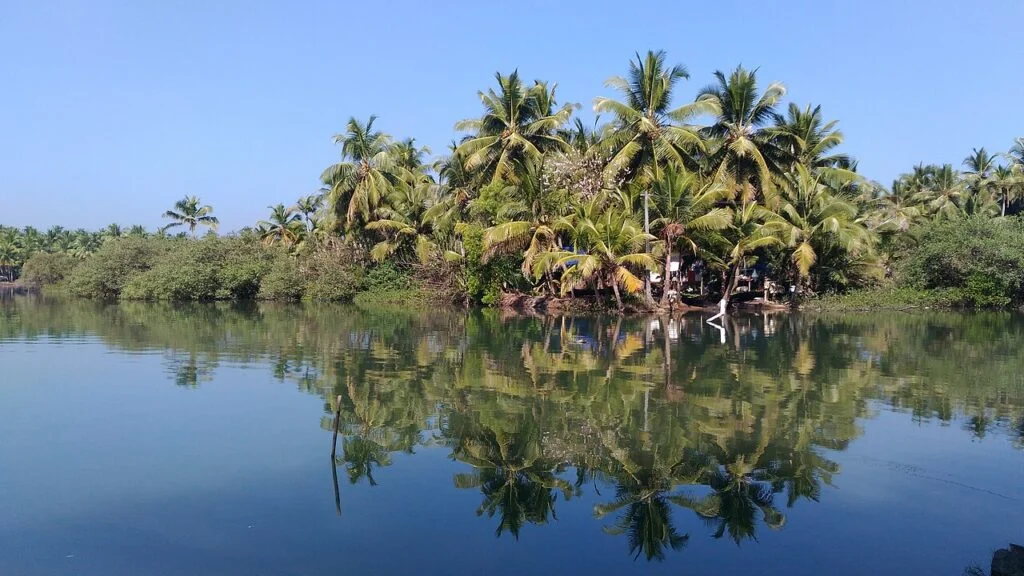
Kasaragod is the northernmost district of Kerala, India, bordering Karnataka and the Arabian Sea. Known for its density of historic forts, diverse coastline, multilingual culture, and the iconic Bekal Fort — the largest in Kerala — it is one of the state’s most historically rich and underexplored destinations. Best visited between October and March.
| Attribute | Details |
|---|---|
| Country | India |
| State | Kerala |
| District | Kasaragod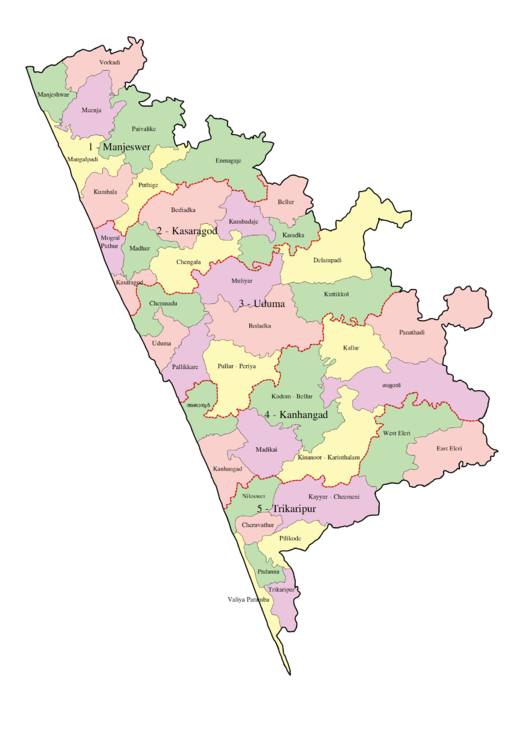 |
| Taluk | Kasaragod, Manjeshwar, Hosdurg, Vellarikundu |
| Government Type | Municipal Corporation |
| Municipal Body | Kasaragod Municipal Corporation |
| District Collector | Arjun Pandian IAS |
| Sub Collector & RDO Kanhangad | Balagopalan K |
| District Police Chief | Vijay Bharath Reddy IPS |
| MP (Member of Parliament) | Rajmohan Unnithan (Kasaragod) |
| Members of Legislative Assembly | Sandeep Varier (Trikaripur MLA) |
| Kallatra Mayin Haji (Kasaragod MLA) | |
| K. Neelakandan (Udma MLA) | |
| Govindan Pallikappil (Kanhangad MLA) | |
| A K M Ashraf (Manjeshwar MLA) | |
| Languages Spoken | Malayalam, Kannada, Tulu, Beary, Konkani, Urdu, Hindi |
| Nearest Airport | Mangalore International Airport (69 km), Calicut International Airport (200 km) |
| Railway Station | Kasaragod Railway Station (Southern Railway Zone) |
| Bus Station | Kasaragod KSRTC Bus Station (+91 499 423 0677) |
| Nearby Districts | Kannur, Wayanad, Mangalore, Kozhikode, Udupi |
| Famous Food | Kozhi Curry, Meen Curry, Neer Dosa, Appam, Kotte Kori |
| Speciality | Coastal seafood, Local spices, Traditional crafts |
| Tourist Attractions | Bekal Fort, Chandragiri Fort, Ranipuram, Valiyaparamba Beach, Ananthapuram Lake Temple |
| Best Time to Visit | October to March |
Kasaragod is the northernmost district of Kerala, sharing borders with Karnataka to the north and east, and the Arabian Sea to the west. It is known for its concentration of historic forts, multilingual population, diverse beaches, and the presence of Bekal Fort — the largest fort in Kerala.
Kasaragod sits at a meeting point of cultures, languages, and landscapes that few districts in India can match. To the west, it opens onto the Arabian Sea with a long coastline dotted with beaches and river mouths. To the east, the terrain rises into forested hills that connect with the Western Ghats. In between, Kasaragod district holds a landscape of rivers, estuaries, paddy fields, and coconut groves.
The district is sometimes called the ‘Land of Seven Languages’ — Malayalam, Kannada, Tulu, Beary, Konkani, Marathi, and Urdu are all spoken here, a result of centuries of trade, migration, and cultural exchange along the Malabar coast. This linguistic diversity has also produced a rich tradition of art, architecture, and religious practice.
Kasaragod town itself is a practical and well-connected base. It has a railway station on the main Mangalore–Palakkad line, good road connections via NH 66, and is about 50 km from Mangalore International Airport. The town has hospitals (including Aster MIMS Kasaragod), markets, and accommodation options at different price points. Most of the district’s tourist attractions are within 30–40 km of the town.
Kasaragod’s documented history spans over a thousand years. It was part of the Mushika (Kolathiri) kingdom, later came under the Keladi Nayakas, then Hyder Ali and Tipu Sultan of Mysore, and finally the British. It was merged with Kerala state in 1956 and became a separate district in 1984.
In the early medieval period, Kasaragod was part of the territory controlled by the Mushika or Kolathiri dynasty — also known as the Chirakkal Royal Family — who held sway over much of North Malabar. The region’s coastline made it commercially significant, with Bekal functioning as an active port. After the decline of the Vijayanagara Empire following the Battle of Talikota in 1565, feudatory chiefs including the Keladi (Ikkeri) Nayakas grew in power. It was during this period that Shivappa Nayaka consolidated the Kasaragod area and built Bekal Fort around 1650 AD — a structure that still stands as the largest fort in Kerala.
After the Nayaka period, Hyder Ali of Mysore conquered the region in the 18th century. His son Tipu Sultan used Kasaragod’s coastal forts as strategic military stations during his campaigns against the British in Malabar. After Tipu Sultan’s death in 1799, the British East India Company took control. Under British administration, the area was part of South Canara District in the Madras Presidency — which is why Kasaragod shares cultural ties with coastal Karnataka to this day. When India’s states were reorganised on linguistic lines in 1956, the area was transferred to Kerala. Kasaragod became a separate district only on 24 May 1984, carved out of what was then Kannur district.
The old name ‘Kasargod’ (or Kasaragode) appears in historical records and colonial-era documents. The name is believed to derive from ‘Kasa’ (a type of grass) and ‘Kadu’ (forest), though other etymologies have been proposed. The present official name is ‘Kasaragod’ in Malayalam.
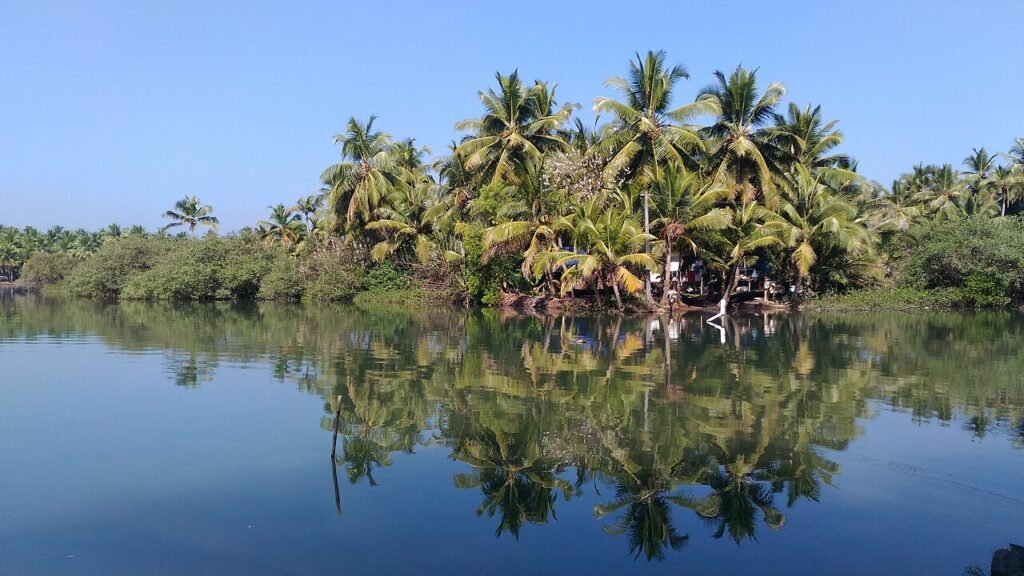
Kasaragod is famous for Bekal Fort (the largest fort in Kerala), its multilingual and multicultural identity, a coastline with multiple distinct beaches and river mouths, the Ananthapura Lake Temple, Ranipuram Hills, and a density of historic forts found nowhere else in Kerala.
The single most recognised feature of Kasaragod is Bekal Fort — a 17th-century sea-facing fort that covers over 40 acres and has three-quarters of its perimeter touching the Arabian Sea. It was declared a special tourism area by the Government of India in 1992. The filming of the song ‘Uyire Uyire’ from Mani Ratnam’s Tamil film Bombay (1995) at Bekal introduced the fort to millions across the country.
Beyond the fort, Kasaragod is notable for the sheer number of historic structures in a single district. Chandragiri Fort, Hosdurg Fort, Arikady Fort (also called Kumbla Fort), and the ruins at Polippuly Fort are all within the district. No other district in Kerala has this many surviving forts. This concentration of coastal fortifications reflects Kasaragod’s strategic importance over several centuries.
Kasaragod’s cultural diversity is itself a reason visitors find the district interesting. The Beary community has its own language, cuisine, and architectural traditions. The Tulu-speaking population maintains its own ritual arts and temple culture. Malayalam-speaking Kasaragod has its own Theyyam tradition. This coexistence of distinct communities gives the district a cultural texture that is genuinely different from the rest of Kerala.
October to February is the ideal time to visit Kasaragod. The monsoon has retreated, temperatures are moderate (22–32°C), the sea is calm, beaches are accessible, and the forts and hill stations are at their most pleasant. Avoid June to August for outdoor sightseeing.
October to February is the recommended travel window for Kasaragod. The northeast monsoon withdraws by mid-October, leaving behind cleaner air and a greener landscape. Temperatures stay manageable, humidity drops, and the sea conditions allow beach access and boat rides on the backwaters. This period is also ideal for trekking in Ranipuram Hills.
March and April are warm and progressively hotter, with temperatures sometimes exceeding 35°C by April. Visiting the forts early morning or late afternoon is practical during this window.
June through September is the southwest monsoon season. Kasaragod receives among the heaviest rainfall in Kerala during this period. Outdoor sightseeing at beaches and hilltops is difficult. The sea becomes rough and beach access is restricted. Some visitors come specifically for the monsoon scenery — if so, focus on the forts and forested drives rather than beaches.
In Kasaragod, visitors can explore historic forts, walk along varied beaches, trek in Ranipuram Hills, take boat rides on Valiyaparamba Backwaters, visit the Ananthapura Lake Temple, and experience the local market culture of Kasaragod town.
Walking the perimeter of Bekal Fort is the centrepiece activity for most visitors. The fort walls, observation tower, and sea views give a full experience in about 90 minutes. Combining Bekal Fort with adjacent Bekal Beach in the same visit is very practical — most people do this as a half-day plan.
For nature, a trek through Ranipuram Hills offers a sharp contrast to the coastal experience. The shola grasslands and views of the Western Ghats attract trekkers from November to February. Kareem’s Forest Park near the Karnataka border is India’s largest privately developed man-made forest sanctuary and offers nature walks.
The backwaters of Valiyaparamba, accessed from the Kanhangad area, offer a quieter alternative to the more commercial backwater circuits in central Kerala. Boat rides here take visitors through a network of islands and water channels. Thaikadappuram Beach, known as a nesting ground for Olive Ridley turtles, is worth a visit during nesting season (November to January).
For cultural and religious experiences, the Ananthapura Lake Temple and Madhur Temple are must-visits. The Malik Deenar Mosque at Thalangara is one of the oldest mosques in India. For local food, the Kasaragod town market is a good place to experience Beary cuisine — Beary biryani, pathiri, and regional fish curry.
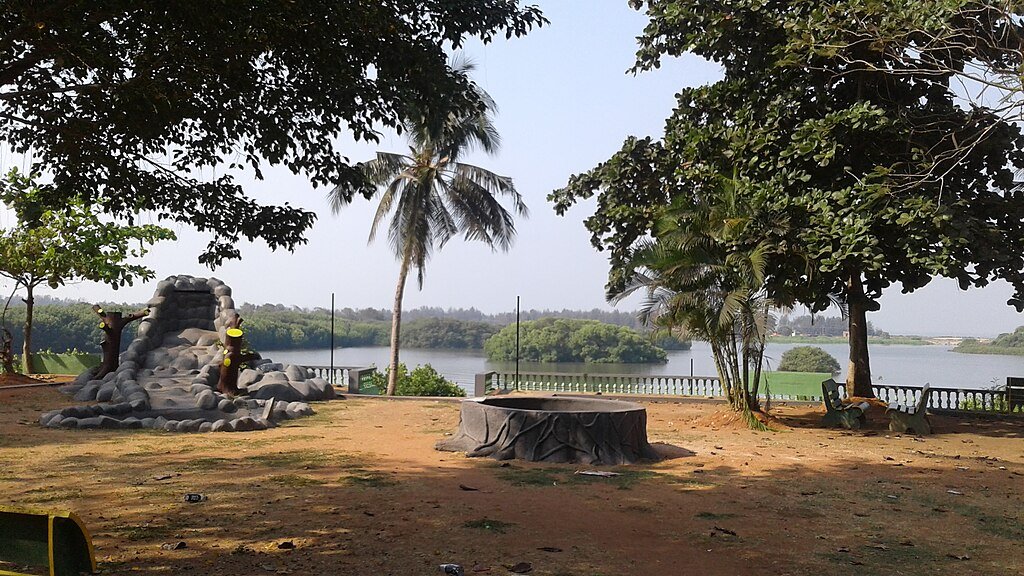
Kasaragod is easily reachable by road via NH 66 (about 50 km from Mangalore, 90 km from Kannur), by train from Kasaragod Railway Station on the Mangalore–Palakkad line, and by air via Mangalore International Airport approximately 50 km away.
By Road: NH 66 passes through Kasaragod and connects it directly to Mangalore in the north (approximately 50 km, about 1 hour) and Kannur in the south (approximately 90 km, about 2 hours). KSRTC and private buses operate frequently on both routes. From Kozhikode, the drive is around 200 km on NH 66. Within the district, autos, taxis, and local buses connect Kasaragod town to most tourist destinations.
By Train: Kasaragod Railway Station sits on the Mangalore–Palakkad (Shoranur) main line. Express trains from Mumbai, Bangalore, Chennai, and Thiruvananthapuram stop at Kasaragod. The Bekal Fort Railway Station, about 16 km south of Kasaragod town, is a smaller halt useful for visitors heading directly to Bekal Fort. Kanhangad Railway Station (about 25 km south) also has good connectivity.
By Air: The nearest airport is Mangalore International Airport (IXE), approximately 50 km north of Kasaragod town. This airport has flights connecting to major Indian cities and several Gulf destinations. From the airport, a taxi to Kasaragod takes about 1 to 1.5 hours. Kannur International Airport (CNN), about 90 km south, is the second nearest option.
Kasaragod district has over 30 significant tourist attractions spread across four categories: historical forts and palaces, beaches and backwaters, hills and nature, and religious and cultural sites.
Bekal Fort is the largest fort in Kerala, covering over 40 acres on a laterite headland in Kasaragod district. Built around 1650 AD under Shivappa Nayaka of the Keladi dynasty, the fort’s most striking quality is its position — nearly three-quarters of its perimeter is surrounded by the Arabian Sea, giving it the appearance of emerging from the water. The fort’s thick walls, zigzag entrance, multi-level embrasures, and a central observation tower added during Tipu Sultan’s time make it a textbook example of 17th-century coastal military architecture. It is maintained by the Archaeological Survey of India and is a declared special tourism area.
Bekal Fort draws visitors for multiple reasons. History enthusiasts come to study its construction and the broader history of the Keladi Nayakas and Mysore Sultans. Photographers come for the sea views and the quality of light at sunrise and sunset. Film enthusiasts come because of the Bombay (1995) connection — the song ‘Uyire Uyire’ was filmed here by Mani Ratnam, introducing Bekal to millions across India. The adjacent Bekal Beach is accessible from the same complex, making it easy to combine both in a single half-day visit. Timings are approximately 8:00 AM to 6:00 PM; entry fees apply.
Chandragiri Fort is a 17th-century fort located at the confluence of the Chandragiri River and the Arabian Sea, approximately 7 km from Bekal Fort in Kasaragod district. The fort was built around the same period as Bekal Fort, during the Keladi Nayaka era, and served as a companion defensive structure on the Kasaragod coastline. Unlike Bekal, which is larger and more heavily visited, Chandragiri Fort occupies a quieter position on a hill overlooking the river and the sea simultaneously.
The views from Chandragiri Fort are among the most layered in Kasaragod — you can see the Chandragiri River below, the Arabian Sea in the distance, and the forested hills to the east. The fort is in a partially ruined state, which adds to its atmosphere. A small boat service crosses the Chandragiri River to reach the fort from the road, which adds a pleasant element to the visit. Chandragiri is typically quieter than Bekal and suits visitors who want to explore historic structures without crowds.
Hosdurg Fort is located in Kanhangad, Kasaragod district, and is notable for its unusual round bastions — a design feature not commonly seen in Kerala’s fort architecture. The fort has a spiritual dimension as well, and the surrounding Hosdurg (Kanhangad) area has deep roots in local religious tradition. Hosdurg was also historically significant as a taluk headquarters and administrative centre under the British.
The fort structure is partially intact, with the round bastions being its most distinctive architectural feature. Visitors interested in military architecture will find Hosdurg a useful complement to Bekal — the two forts use different design philosophies. The town of Kanhangad has a market and food options that make it a practical midpoint on any Kasaragod itinerary. Kanhangad Railway Station is close by and has good express train connectivity.
Arikady Fort, also referred to as Kumbla Fort, is an ancient fort near the Kumbla area of Kasaragod district, close to the Kerala-Karnataka border. The fort sits at an elevated position and offers panoramic views of the coastline and the surrounding landscape. It is considerably less visited than Bekal or Chandragiri, which makes it appealing to travellers looking for historic sites off the main tourist path.
The fort is in partial ruins but retains enough of its original structure to give a sense of its scale and strategic position. The views from the fort, particularly toward the sea, are one of its main draws. Nearby, the Kumbla area has a local market, a river crossing, and easy road connections to both Mangalore and Kasaragod town. Visitors combining Arikady Fort with a visit to Maipady Palace can see both in a single morning.
Maipady Palace is the historic seat of the Kumbla Kings and is located on the Kasaragod-Perla Road. The palace is a heritage structure in the traditional Kerala-Karnataka border architectural style, reflecting the dual cultural influences of Malabar and Tulu Nadu that characterise Kasaragod. The Kumbla Kings were a minor royal family who held authority in the coastal borderlands during the medieval and early modern periods.
The palace is not a major commercial tourist attraction but is of genuine historical and architectural interest, particularly for visitors interested in the regional royal history of Kasaragod beyond the well-known Keladi Nayaka narrative. The building’s traditional design and its position on the road connecting Kasaragod to the Perla area make it a worthwhile stop for those with a specific interest in heritage structures.
Polippuly Fort is a lesser-known historic ruin in Kasaragod district, suited to visitors specifically interested in exploring offbeat history and partially-preserved fortification remains. The site does not have the infrastructure or visitor facilities of Bekal or Chandragiri, and it is not on the standard tourist route. For this reason, it tends to attract history enthusiasts and travellers who want to move beyond the main circuit.
The ruins give a sense of the sheer number of defensive structures that once dotted the Kasaragod coastline. When seen in the context of Bekal, Chandragiri, Hosdurg, and Arikady Forts, Polippuly Fort completes the picture of a district that was intensely contested and heavily fortified over several centuries. Visiting Polippuly requires some local enquiry about access and is best approached with a guide familiar with the Kasaragod district interior.
Kappil Beach is located approximately 6 km from Bekal Fort in Kasaragod district and is known for the point where the Kappil backwaters meet the Arabian Sea. The beach itself is relatively quiet and long, with good conditions for walking at the water’s edge. The backwater side offers boat rides through the palm-lined water channels — a contrast to the open sea front. Kappil is most popular in the late afternoon and at sunset.
Kappil Beach can be combined easily with a Bekal Fort visit, as both are within a few kilometres of each other. The beach has some local tea stalls and food vendors but does not have large resort infrastructure, which keeps the crowd level manageable. Boat rides on the Kappil Lake backwaters typically take about 30–45 minutes. Internal link: askkerala.com/bekal-beach/
Valiyaparamba Backwaters is a stretch of interconnected waterways and islands in Kasaragod district, accessed from the Kanhangad area. It is sometimes described as a quieter and less commercial alternative to the Alleppey backwaters further south in Kerala. The backwater network consists of four large islands and numerous smaller ones, surrounded by narrow channels of water lined with coconut palms and fishing communities.
Valiyaparamba has not been developed to the same commercial scale as the central Kerala backwaters, which is both its limitation (fewer facilities) and its appeal (fewer tourists). Visitors who have already done Alleppey and are looking for a similar but quieter backwater experience will find Valiyaparamba rewarding. The best way to explore is by local boat or canoe. The fishing communities on the islands maintain a traditional way of life that gives the experience a genuine local quality.
Thaikadappuram Beach in Kasaragod district is known primarily as a nesting ground for Olive Ridley sea turtles, which come ashore here between November and January to lay eggs. The Kerala Forest Department manages the nesting protection programme at this beach, and visitors during the nesting season may be able to observe the process under supervised conditions. Outside nesting season, the beach is a long and relatively empty stretch of coast, good for walks.
The turtle nesting at Thaikadappuram gives it a distinct identity among Kasaragod’s many beaches. Wildlife observers and nature photographers specifically come here during the November to January window. The beach does not have large commercial development, and access is straightforward from the NH 66 corridor. Visitors should respect the Forest Department guidelines regarding the nesting areas and avoid disturbing marked zones.
Azhithala Beach is located at the point where the Tejaswini River meets the Arabian Sea in Kasaragod district. This river-meets-sea setting gives the beach a distinctive character — the interaction of fresh river water and saltwater creates a slightly different shoreline environment from standard sea beaches. The beach is relatively uncrowded and offers a peaceful setting for those looking to escape the more visited spots.
The Tejaswini River flows through interior Kasaragod before reaching the sea at Azhithala, passing through fishing communities and coconut groves. A visit to Azhithala can be paired with a short exploration of the Tejaswini riverbank. The beach itself is good for photography, particularly around high tide when the river and sea interact visibly.
Chembirika Beach in Kasaragod district is known for its rocky shores and calm atmosphere. The rocky outcrops that characterise the beach create natural pools and interesting formations at the water’s edge, making it visually different from the longer sandy beaches at Bekal or Kappil. The calm atmosphere makes Chembirika a good option for visitors who find the more popular beaches too busy.
The beach is not heavily promoted in standard Kasaragod tourism literature, which keeps foot traffic low. Visitors who make the effort to find it report a genuinely relaxed experience. The rocky shore is best explored at low tide. Chembirika is within the coastal belt of Kasaragod and can be reached by road with some local navigation assistance.
Kanwatheerta Beach in Kasaragod is notable for a natural rock formation in the sea that creates a large, swimming-pool-like enclosure — a rare and unusual feature for a beach in Kerala. This natural formation protects swimmers from stronger currents while still giving the experience of being in the sea, which makes the beach particularly popular with families and children.
The pool-like formation is the reason Kanwatheerta gets specific mention rather than simply being another coastal stop. It is one of the more family-friendly beach options in Kasaragod because of the natural protection the rock formation provides. The beach is quieter than Bekal Beach, and its natural infrastructure makes it a practical swimming spot outside the monsoon months.
Pallikere Beach is a shallow, calm beach in Kasaragod district that offers direct views of Bekal Fort from the shoreline — a perspective that is quite different from the view inside or atop the fort. The shallow water makes it safe for wading, and the fort view makes it popular with photographers who want to capture Bekal Fort from the sea side.
Pallikere is a useful complement to a Bekal Fort visit. After spending time inside the fort, walking to Pallikere Beach and viewing the fort from the water side gives a fuller picture of how the structure relates to its coastal setting. The beach is a short distance from the Bekal complex and is easy to combine in the same visit without additional planning.
Nellikunnu Beach is located near Kasaragod town itself, making it one of the most accessible beaches in the district for visitors staying in the town. It is a calm beach with relatively modest visitor numbers, suited for an evening walk or a short outing. The Kasaragod Lighthouse is also located at Nellikunnu, adding a visual landmark to the beach setting.
The beach’s proximity to Kasaragod town means that local residents use it regularly, giving it a lived-in, local quality rather than a packaged tourist feel. For visitors based in Kasaragod town, Nellikunnu offers an easy half-hour sea experience without the travel time needed for Bekal or Kappil. The lighthouse, maintained by the Directorate General of Lighthouses and Lightships, adds a functional heritage element to the spot.
Ranipuram Hills, located in the eastern part of Kasaragod district near the Karnataka border, is often referred to as the ‘Ooty of Kerala’ for its elevated terrain, shola grasslands, and cooler temperatures. The hills rise to about 750 metres above sea level and offer trekking routes through grasslands and patches of shola forest — a type of montane evergreen forest characteristic of the Western Ghats. Trekking in Ranipuram is best from October to February.
Ranipuram is managed partly as a forest reserve, and trekking is done under the supervision of the Forest Department. The trek to the hilltop takes about 2–3 hours one way depending on fitness and pace, and the views from the summit extend toward the sea in the west and the Karnataka hills in the east. Overnight stays in forest rest houses are possible with prior permission. Ranipuram gives Kasaragod’s itinerary a genuine hill station dimension — very different from the coastal and fort-focused experiences elsewhere in the district.
Kottancheri Hills is an extension of the Ranipuram range in Kasaragod district and offers an alternative trekking route for those who want to explore the hill terrain beyond the main Ranipuram circuit. The hills are forested and the trails pass through diverse vegetation. Like Ranipuram, the best trekking conditions are during the post-monsoon period from October to January.
Kottancheri is less well-known than Ranipuram and consequently sees fewer visitors, which is an advantage for trekkers seeking a quieter experience. The two hills can be combined into an extended trekking itinerary for those spending multiple days in the Kasaragod district interior. Local guides are advisable for routes that go deeper into the forest terrain.
Posadi Gumpe is a hilltop near the Karnataka border in Kasaragod district that offers panoramic views extending in two very different directions — toward the Arabian Sea to the west and toward the Kudremukh mountain range to the east. The combination of these two distinct landscapes from a single vantage point makes Posadi Gumpe a rewarding destination for hikers and photographers.
The hilltop setting near the Karnataka border means Posadi Gumpe is most easily reached from the interior roads of Kasaragod district. The site is not heavily developed and requires some local knowledge to access efficiently. Visitors combining Posadi Gumpe with Ranipuram Hills can plan a full day in the eastern highland section of Kasaragod, covering both well-known and less-known hilltop viewpoints.
Veermala Hills in Kasaragod district features the ruins of an 18th-century Dutch fort on the hilltop and offers views of the Kariangode River as it winds through the landscape below. The Dutch connection links Kasaragod to the broader history of European trade and fortification on the Malabar coast, where the Dutch had a presence at several points along the Kerala coastline in the 17th and 18th centuries.
The combination of a hillside ruin and river views makes Veermala an interesting stop for travellers with an interest in lesser-known colonial history. The ruins are not as well preserved as the main district forts, but the hilltop setting and the views of the river valley provide context for why the Dutch chose this location. Access is by road to the base of the hill followed by a short climb.
Kareem’s Forest Park, located in Kasaragod district near the Karnataka border, is described as India’s leading private man-made forest and sanctuary. The park was developed over several decades by a private individual who planted and cultivated a dense forested area that now functions as a de facto wildlife sanctuary, hosting significant biodiversity including birds, butterflies, and small mammals.
The park offers nature walks and guided trails through the planted forest. It is a genuinely interesting example of individual conservation effort and attracts both wildlife enthusiasts and those interested in environmental history. The forest cover was deliberately grown rather than naturally occurring, demonstrating how degraded land can be restored with sustained effort. Entry is managed by the park; advance booking or inquiry is recommended.
Achankallu Waterfalls is a natural waterfall located in the green interior of Kasaragod district. The falls are tucked within forested terrain and are most impressive during and immediately after the monsoon season (July to October), when the water flow is at its peak. During the post-monsoon period through November, the falls still flow well and the surrounding greenery is at its most lush.
Achankallu is a local favourite and draws visitors from within Kasaragod district, particularly during weekends and the post-monsoon period. The setting is typical of the Kerala interior — dense vegetation, laterite rock formations, and the sound of water moving through the landscape. The falls are best visited in the morning before crowds build. Footwear with grip is advisable as the approach can be wet.
Malom Wildlife Sanctuary is a protected forest area in Kasaragod district that covers diverse tropical flora and fauna characteristic of the lower Western Ghats. The sanctuary provides habitat for a range of bird species, reptiles, and small mammals. It functions as part of the broader forest corridor in the eastern part of the district.
Malom is not a heavily commercialised wildlife destination, but it is a meaningful green space for birding and nature walks in the Kasaragod context. Visitors interested in the natural ecology of northern Kerala’s forest areas will find Malom a worthwhile addition to a multi-day Kasaragod itinerary. Entry and access are managed by the Forest Department; advance permission may be required.
Ananthapura Lake Temple is the only lake temple in Kerala and holds the distinction of being regarded as the original seat (moolasthana) of Lord Ananthapadmanabha, whose principal temple is the Padmanabhaswamy Temple in Thiruvananthapuram. Located near Kumbla in Kasaragod district, the temple sits on a small island in the middle of a lake, surrounded by water on all sides and accessible by a short bridge.
The temple draws pilgrims from across Kerala and beyond. The lake is home to a vegetarian crocodile — a resident of the temple tank — which has become part of the temple’s folklore. The peaceful setting, the architectural simplicity of the island temple, and the religious significance make Ananthapura one of the most distinctive sites in Kasaragod. It is about 30 km from Kasaragod town.
Madhur Temple, formally known as the Madhuvahini Ganapathy Temple, is located near Kasaragod town and is famous for its unique Gajaprishta (elephant-back) architectural style — a curved roof design that is rare in Kerala temple architecture. The temple is dedicated to Lord Ganesha and is one of the most visited temples in Kasaragod district, drawing devotees from both Kerala and Karnataka. The Madhur River flows adjacent to the temple complex.
The architectural distinctiveness of Madhur Temple sets it apart from the more common Kerala temple styles. The temple is active and hosts major festivals including Vinayaka Chaturthi. The riverside setting, the main sanctum’s design, and the surrounding temple complex are all worth close attention. The temple is about 8 km from Kasaragod town.
Malik Deenar Juma Masjid at Thalangara in Kasaragod district is one of the oldest and best-preserved mosques in India. It is associated with Malik ibn Deenar, an Arab trader and missionary believed to have been among the first to bring Islam to the Malabar coast in the 7th–8th century AD. The mosque’s architecture reflects the traditional Kerala mosque style that developed as Arab traders adapted to local building practices.
The mosque is a significant heritage site for both its age and its association with the earliest history of Islam in Kerala. The surrounding Thalangara area has a long-established Muslim community with historical ties to Arab trade. Visitors of all backgrounds interested in religious architecture and the history of Islam in South India come to see this mosque. The structure has been carefully maintained over centuries and retains its historic character.
Mallikarjuna Temple is located in the heart of Kasaragod town and is dedicated to Lord Shiva in the form of Mallikarjuna. The temple is an active place of worship and a focal point for the town’s Hindu community, hosting vibrant festivals particularly around Mahashivaratri. The temple architecture reflects the regional Kerala-Karnataka style characteristic of temples in the border zone of the two states.
The temple’s central location in Kasaragod town makes it easy to visit in combination with a morning or evening in the town market. The festivals at Mallikarjuna Temple attract large numbers of devotees and are an opportunity for visitors interested in the living religious culture of Kasaragod. The temple priests can often provide historical context for the temple’s significance in the local community.
Bela Church, formally known as the Church of Our Lady of Sorrows, is the oldest church in Kasaragod district and is built in the Gothic architectural style. The church is located in Bela, close to Kasaragod town, and reflects the presence of the Christian community in this part of northern Kerala — a community with historical roots going back several centuries in the coastal trade zones of the Malabar coast.
The Gothic style of Bela Church is striking in the Kerala context, where the dominant Christian architecture is the traditional gabled wooden-roof style. The age of the structure, its European Gothic styling, and its historical significance as the oldest church in the district make it a worthwhile stop for visitors interested in the multi-religious heritage of Kasaragod. The church is an active parish.
Sree Mahalingeswara Temple at Adoor in Kasaragod district is an ancient Shiva temple known for its historical inscriptions, which provide primary source evidence about the history of the region. Ancient temples with inscriptions in situ are relatively rare and give historians and heritage enthusiasts direct contact with medieval documentary evidence. The temple itself is architecturally traditional and is an active place of worship.
Adoor is not on the main Kasaragod tourist circuit, but the temple’s inscriptions are of genuine scholarly and historical significance. Visitors with an interest in epigraphy, temple history, or the broader history of the Kasaragod region will find the site rewarding. The temple’s setting in a smaller village gives it a local, community quality quite different from the heavily visited temples in Kasaragod town.
Madiyan Kulam Temple in Kasaragod district is known for two specific features: its intricate wooden carvings, which represent the skill of traditional Kerala wood craftsmanship, and the ‘Bootham’ dance ritual performed here — a ritual art form connected to the spirit propitiation traditions of North Kerala and coastal Karnataka. The Bootham tradition involves ritualistic performance connected to the broader Theyyam and Bhuta Kola traditions of the region.
For visitors interested in the performing arts and ritual traditions of Kerala, the Bootham dance at Madiyan Kulam Temple offers a glimpse into a cultural practice specific to the Kasaragod-Tulu Nadu cultural zone. The wooden carvings in the temple structure are also worth examining for their craftsmanship. The best time to witness the ritual performances is during the temple festival season; local enquiry is needed for specific dates.
Anandashram and Nityanandasramam are two spiritual centres located in Kanhangad, Kasaragod district. Both ashrams are associated with the Vedanta tradition and draw visitors seeking meditation, spiritual study, and peaceful retreat. Anandashram was established by Swami Ramdas and is a well-known spiritual institution with international followers. The ashram maintains a simple, welcoming atmosphere and accepts visitors who come with sincere intent.
Kanhangad has good railway connectivity, making the ashrams accessible without a car. The ashrams are set in green, quiet surroundings and offer a genuinely different experience from the fort and beach circuit that dominates Kasaragod tourism. Visitors looking for a contemplative element to their Kerala travel often combine a day or two at either ashram with the broader Kasaragod district itinerary.
The Kasaragod Lighthouse is located at Nellikunnu, adjacent to Nellikunnu Beach near Kasaragod town. Maintained by the Directorate General of Lighthouses and Lightships, the lighthouse is an operational navigational aid for vessels along the Malabar coast. From its elevated position, the lighthouse offers a clear aerial perspective of the Kasaragod coastline — the line of the beach, the sea, and the town are visible together from the upper viewing level.
Lighthouses on India’s western coast are generally open to public visits on specific days and hours, typically on selected afternoons of the week — verify current access times before visiting. The Kasaragod Lighthouse at Nellikunnu is the most accessible lighthouse in the district and can be combined with a visit to Nellikunnu Beach in the same outing. The view from the top is one of the best ways to understand the geography of the Kasaragod coastline from a single elevated point.
Kasaragod’s NH 66 corridor connects it quickly to Mangalore (50 km north) and Kannur (90 km south), both of which have their own heritage sites, beaches, and cultural attractions that work well as day trips or extensions.
Mangalore (~50 km): The coastal city of Mangalore in Karnataka has the Kadri Manjunath Temple, St. Aloysius Chapel with its ceiling paintings, the Mangaladevi Temple, and a strong local food culture centred on Tulu and Beary cuisine. Mangalore International Airport also makes it a natural start or end point for a Kasaragod trip.
Kannur (~90 km): Known for its weaving industry, Theyyam ritual arts, and St. Angelo Fort (built by the Portuguese, later controlled by the Dutch and British). Theyyam performances, which happen from October to June at various temples around Kannur district, are a major cultural draw.
Coorg / Kodagu (~150 km east): The hill district of Coorg in Karnataka is accessible from Kasaragod via the NH 275 interior road through Madikeri. Coffee estates, Cauvery River rafting, and a distinct Kodava culture make it a popular addition to extended itineraries.
Kasaragod’s main attractions are spread across the district. Renting a car or hiring a taxi for at least one full day is the most efficient way to cover multiple sites. The NH 66 connects the coastal attractions in a linear route that makes it easy to plan a driving day.
Transport: Kasaragod town has autos and taxis, but the distances between major sites (Bekal is 16 km, Chandragiri is 23 km, Ranipuram is over 50 km) make it impractical to rely entirely on public transport for a sightseeing trip. Renting a car from Kasaragod town or Kanhangad for a day gives the most flexibility.
Accommodation: Kasaragod town has hotels at different price points. Bekal area has resort options if you want to stay closer to the beach and fort attractions. Kanhangad is another practical base, particularly for train travellers, as it has better rail connectivity than Kasaragod town.
Food: Kasaragod has a distinctive food culture. Beary cuisine — available in smaller local restaurants — includes fish preparations, pathiri (rice bread), Beary biryani, and halwa. Kasaragod town’s local market area has tea shops and small restaurants serving authentic regional food at reasonable prices.
Language: Malayalam is the official language and widely understood. Kannada and Tulu are spoken in parts of the district. English is understood at hotels, major tourist sites, and by educated locals.
Mobile connectivity: Coverage is generally good along NH 66 and in the main towns. In the eastern highland areas (Ranipuram, Kottancheri), connectivity can be weaker — download offline maps before heading to the hills.
Kasaragod holds several unusual distinctions within Kerala — from being the state’s only ‘seven-language district’ to having the highest concentration of sea-facing forts anywhere in Kerala.
Kasaragod is the northernmost district of Kerala, India. It borders the state of Karnataka to the north and east, and the Arabian Sea to the west. Kasaragod town is approximately 50 km from Mangalore and about 90 km from Kannur.
Kasaragod is famous for Bekal Fort (the largest fort in Kerala), its collection of historic coastal forts, the Ananthapura Lake Temple (the only lake temple in Kerala), its multilingual and multicultural identity known as the Land of Seven Languages, Ranipuram Hills, and a coastline with multiple distinct beaches and river mouths.
The old name of Kasaragod is ‘Kasargod’ or ‘Kasaragode’ — both spellings appear in historical records and colonial-era documents. The name is believed to derive from the words for a type of grass (‘Kasa’) and forest (‘Kadu’). The present official Malayalam spelling is ‘Kasaragod’.
Kasaragod is reachable by road via NH 66 (50 km from Mangalore, 90 km from Kannur), by train from Kasaragod Railway Station on the Mangalore–Palakkad line (express trains from Mumbai, Bangalore, Chennai, and Thiruvananthapuram stop here), and by air via Mangalore International Airport approximately 50 km away.
Kasaragod is in the state of Kerala, India. It is the northernmost district of Kerala and shares its northern and eastern borders with Karnataka.
The top tourist places in Kasaragod include: Bekal Fort, Chandragiri Fort, Ananthapura Lake Temple, Madhur Temple, Kappil Beach, Valiyaparamba Backwaters, Ranipuram Hills, Malik Deenar Juma Masjid, Thaikadappuram Beach (Olive Ridley turtle nesting), and Kareem’s Forest Park.